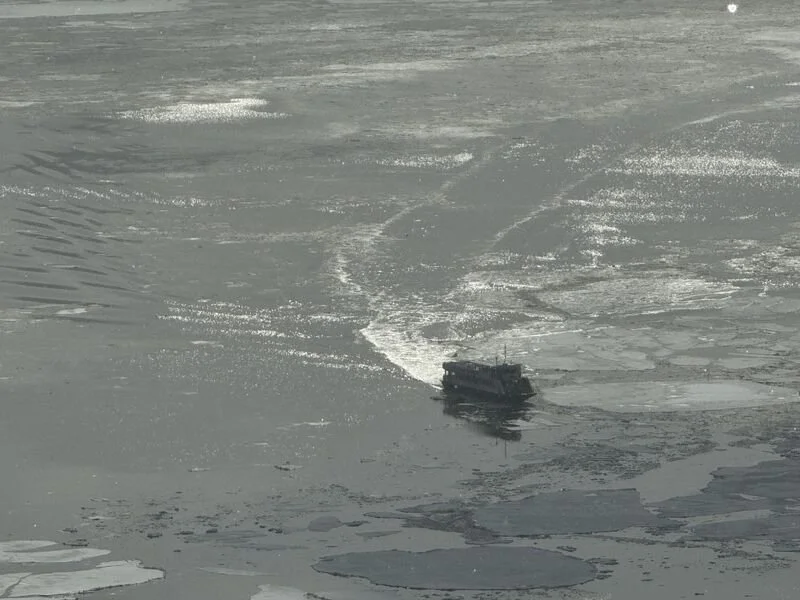
The moment the Hudson froze
The one thing I remember from inorganic chemistry is that when water changes state from liquid to solid or from solid to liquid, there's a moment when a blip of energy is required to make the change.
It doesn't just go 34-33-32-31--no. At the moment of transition, a momentary jolt of extra energy binds the water into crystals. When the ice melts, as we ordinary mortals see it, a little burst of heat is released as the bonds of ice are broken. This happens at a molecular level.
For me, standing at the window, it took the form of a momentary gasp, as I saw the river turn solid.
If you want change, you have to put in the extra energy.
The ferry left tracks in the freezing water that was not quite bound.
See those waves, to the left. That's the tide, made visible.